
 My Agento


Can You Buy OCTA for One Day? Policy Terms, Exceptions and Winter Breaks
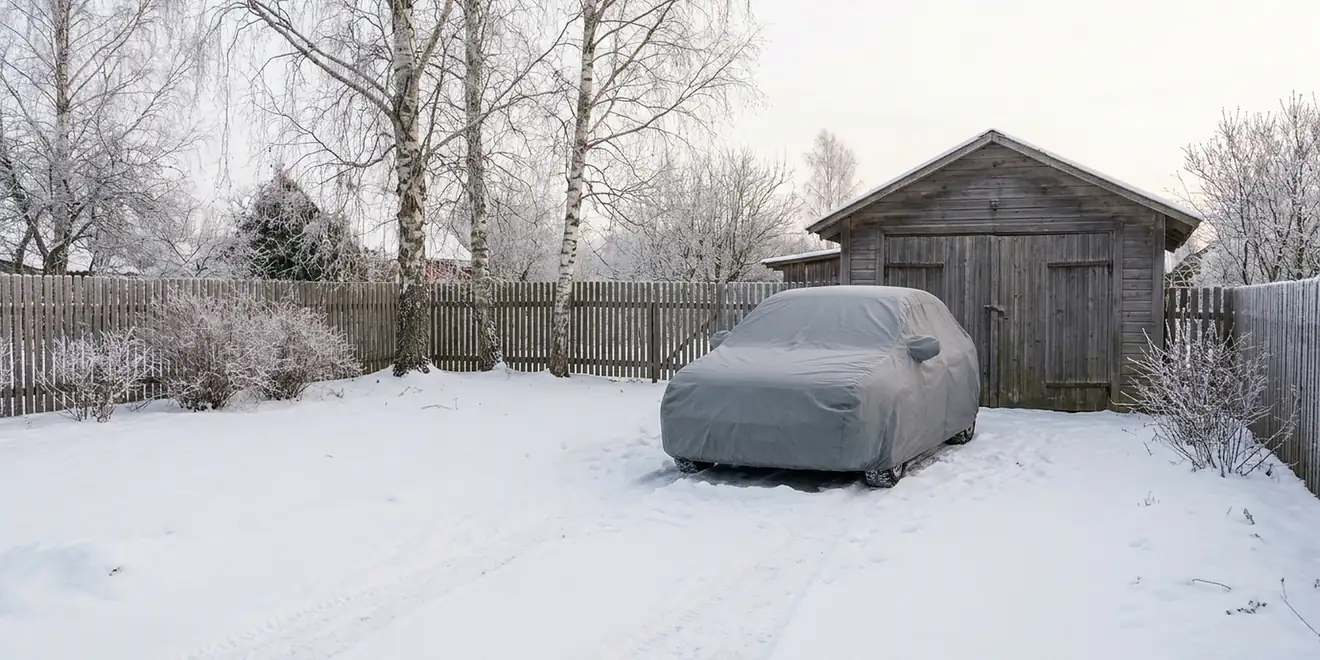
Need to drive to a technical inspection, bring home a car you have just bought or take your summer car out just once? That is when people search for "OCTA for one day". The short answer: for an ordinary car registered in Latvia, no such policy exists. There are, however, legal ways to avoid overpaying and a few exceptions where the term can be different. Here is how it works under the OCTA Law and the CSDD rules in force in autumn 2026.
What OCTA terms are available
Article 9 of the OCTA Law says a standard contract is concluded for one, three, six, nine or 12 months. So the shortest term for a car registered in Latvia is one month, even if you only plan to drive for a day. You do not have to buy the policy "from right now": the contract starts when it is concluded or at the time stated in it, but no later than three months after it is concluded. You can buy it in advance and set the start date for the day you need it.
One detail matters: noon. If the contract starts before 12:00, the start day counts towards the term; if it starts at 12:00 or later, it does not. The exact start and end time is always shown on the policy, and it is worth checking so that no empty day is left between the old and the new policy.
Other contract types have their own terms. Border insurance for a car from outside the EEA without insurance valid in Latvia is available for one to 12 months. A Green Card for trips to countries where the standard OCTA does not apply runs from 15 days to 12 months.
When the term can be different
The law provides for exceptions where the OCTA term is set by a document rather than chosen from the list:
- Transit number plates. If the car has been issued a transit number card, OCTA is concluded for the validity period shown on the card. CSDD issues transit numbers for 30 days, and the term can be extended once for the same period. Note that when a transit number card is issued, any previous OCTA contract for that car ends early.
- A car bought or deregistered in another European Economic Area (EEA) country or Switzerland to be brought to and registered in Latvia: the standard contract is concluded for 30 days.
- A temporarily registered car: OCTA can run until the end date shown in the registration certificate, but for no more than 12 months.
- Test and trade number plates: until they expire, for no more than 12 months. These cases usually apply to companies rather than everyday drivers.
The CSDD one-day permit does not replace OCTA
A search for "one day" often gets mixed up with the CSDD permit to take part in road traffic for one day. It lets you drive a car whose technical inspection has expired from where it is parked or repaired to the nearest inspection station. You get the permit in e-CSDD or at a CSDD customer service centre; it is valid only on the date stated, and one car can get it no more than twice per calendar year. It cannot be used to carry passengers or goods or to give driving lessons.
The permit only replaces a valid technical inspection, not insurance. The CSDD conditions say clearly that even with this permit you may drive only if OCTA is in force. So on the way to the inspection you need both the permit and a policy for at least one month.
A single trip: a borrowed car or one you have just bought
A borrowed car. If you borrow a friend's or relative's car for a day, you do not need OCTA of your own. OCTA covers the liability of the vehicle's owner and its lawful user, so the car's valid policy pays for damage you cause to others even when you are the one driving. Before you set off, just check in LTAB's e-service that the policy is in force. If it has expired, the lawful user can take out a contract in the owner's name, but again for at least a month. Keep in mind that an accident you cause in a borrowed car goes into the owner's insurance history.
A car you have just bought. The seller's OCTA ends the moment ownership changes, even if the car has not yet been re-registered. That is why the buyer needs their own policy before the first drive, even if it is only the trip home.
Car parked for the winter: how to legally stop paying for OCTA
The OCTA Law has no option to "freeze" a policy. If a car or motorcycle will not be used for several months, there are two legal routes.
1. Park the car somewhere not publicly accessible. The owner may leave the car uninsured if it is parked where access for third parties is restricted, for example in a locked garage or on fenced private land, and steps have been taken so that it cannot move or be used without the driver's knowledge. A roadside, a public car park or an open courtyard does not qualify. The registration stays active, so you need to buy a policy before the first drive in spring.
2. Temporarily suspend the registration. You can do this in e-CSDD or at a CSDD customer service centre. While the registration is suspended, there is no duty to insure the car, and you pay neither the vehicle operation tax nor the company car tax, but the car may not be used in road traffic. To drive again, you restore the car's registration (if the plates were not handed in to CSDD, this can also be done in e-CSDD), buy OCTA and, if the technical inspection has expired, pass it or get a one-day permit.
Either way, remember that days without OCTA do not count as insured days in your history. If you also want to cover damage to your own car for a set period, such as a season or a trip, there is voluntary short-term KASKO, with available terms set by the insurer.
How to get money back for unused OCTA
If you suspend the registration while the policy is still in force, you can end the OCTA contract early. Send the insurer a written application with a document confirming the suspension. The contract ends at the time stated in the application, but not before the application is submitted.
The premium for the remaining period is refunded, and the insurer may keep no more than 5 percent of it, provided no claim has been made under that contract. Submit the refund application with your bank account number within seven days after the contract ends. If you are late, the premium is refunded only from the moment the application is received. When you sell a car, the contract also ends automatically, and you can claim a refund for the unused time in the same way.
Which term to choose
- For a single trip or before selling the car, the shortest option is a one-month policy. If you sell sooner, you can get the unused part back.
- For a seasonal car or motorcycle, a three, six or nine-month policy covers the driving season, and in winter you can park it somewhere not publicly accessible or suspend the registration.
- For an everyday car, 12 months is the most convenient: fewer renewals and less risk of being left without a policy.
- Before a trip abroad, check that the policy will stay in force for the whole journey. The standard OCTA is valid in the EEA and in other countries that have joined the multilateral agreement between insurance bureaux, while other Green Card countries require a Green Card.
You can compare prices from several insurers for every term from one to 12 months in the OCTA calculator. If your policy has already expired, read about the fines and what to do next.