
 My Agento


Frozen Pipes in Winter: How to Protect Your Home and What Insurance Covers
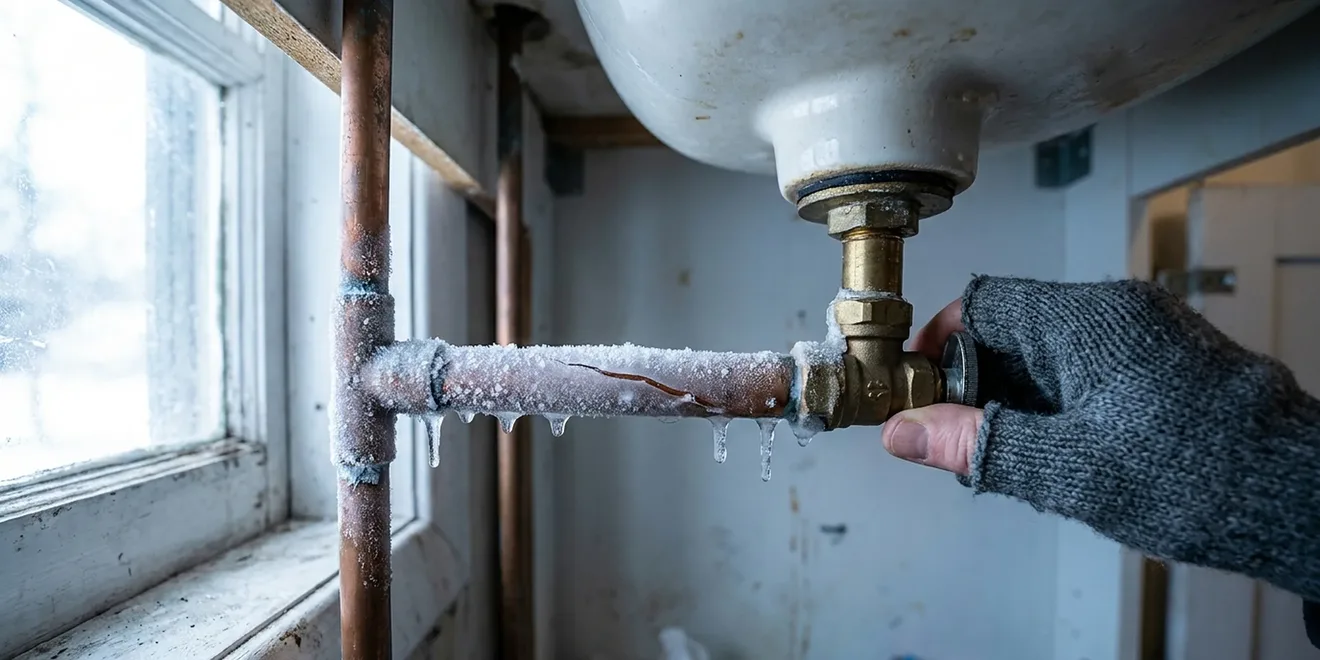
In winter, a water pipe can burst without anyone noticing. While you are away or the summer house stands empty, frost does its work, and the damage shows up only in a thaw, when water has already spread across floors, walls and sometimes the neighbors' ceiling. Here is how frost damages pipes, what to do before a longer absence and how home insurance treats these cases.
Why pipes burst in freezing weather
Water expands as it freezes. When an ice plug forms inside a pipe, pressure builds between the plug and a closed tap or valve until the pipe or a joint gives way. A burst is often not visible right away: while the water is frozen, nothing leaks. The leak starts when the room warms up, and if nobody is home, water can run for hours or even days.
Pipes most at risk run:
- along exterior walls or under windows, where insulation is weaker;
- through an unheated basement, attic or garage;
- to outdoor taps and garden irrigation systems;
- in rooms left unheated in winter, such as a summer house or sauna.
Before a longer absence: a checklist
If you are leaving for days or weeks over the winter holidays, either keep the building heated or drain the water system completely. Heating off with water still in the pipes is the riskiest option.
- Shut off the main water valve in the apartment or house. If a pipe bursts, only the water already in the system escapes.
- Leave minimal heating on in every room with pipes, including the bathroom and utility room. Do not fully close radiator thermostats in unused rooms.
- If you will not keep the heat on, drain the system: close the main valve, open all taps and empty the water heater and pipes. Leave draining the heating system to a professional.
- Drain outdoor taps and garden hoses.
- Insulate pipes in unheated spaces.
- Ask someone to check on your home and show them the main valve.
- Consider a leak or temperature sensor with phone alerts.
Summer houses and rarely visited homes: what the terms require
Insurers' terms often include a safety requirement: if a building is not heated during the heating season and it is freezing outside, the water and heating systems must be drained. The exact temperature threshold and wording differ between insurers, so read them in your own policy terms.
The second key concept is a "permanently occupied" home. The terms usually define how long a property may go without anyone physically checking on it, and that period can be just a few weeks. Under some terms, a building is not permanently occupied if the heating is not used in the heating season or there is no electricity connection. Some insurers also cover a frost-related leak only if the pipes were properly insulated and protected.
If the safety requirements were not followed, the payout can be reduced, and in case of gross negligence the insurer may refuse to pay. Before winter, check how your policy treats a home nobody lives in.
What the policy covers if a pipe does burst
Many home policies list a pipe freezing and bursting inside the building as a covered leakage event. Damage to finishes, floors and walls is usually covered, and so are your belongings if contents are insured. Some terms pay for repairing the burst pipe itself only under extra conditions, for example if the plumbing is not too old. The policy deductible applies.
Other causes of leaks are covered in our article on water leaks and pipe damage.
If water from your apartment floods the neighbors
In an apartment building, a burst pipe rarely affects just one unit. The Latvian Civil Law states that everyone must compensate losses caused by their action or inaction. If the leak started in your apartment, your neighbor can ask you to pay for the repairs.
This is where civil liability cover helps. It can be included in apartment insurance and house insurance. It pays third-party losses up to the policy's liability limit. With property cover alone, you pay for the neighbor's damage yourself.
Once a leak has happened:
- shut off the main valve and notify the building manager or emergency service;
- photograph the damage in both apartments;
- report the case to your insurer promptly and pass on any claims from the neighbor;
- do not promise the neighbor a specific amount before agreeing on it with your insurer.
How to choose the right cover
Before winter, reread your policy: does it include leakage, does it have civil liability cover and what is the limit, and how do the terms treat an unoccupied or seasonal building? If you have bought a new home or your policy is about to expire, compare offers from several insurers, because the differences often hide in exactly these details. Agento brokers can help you compare terms and find cover that fits how you actually use your home.