
 My Agento


Farm Business Insurance in Latvia
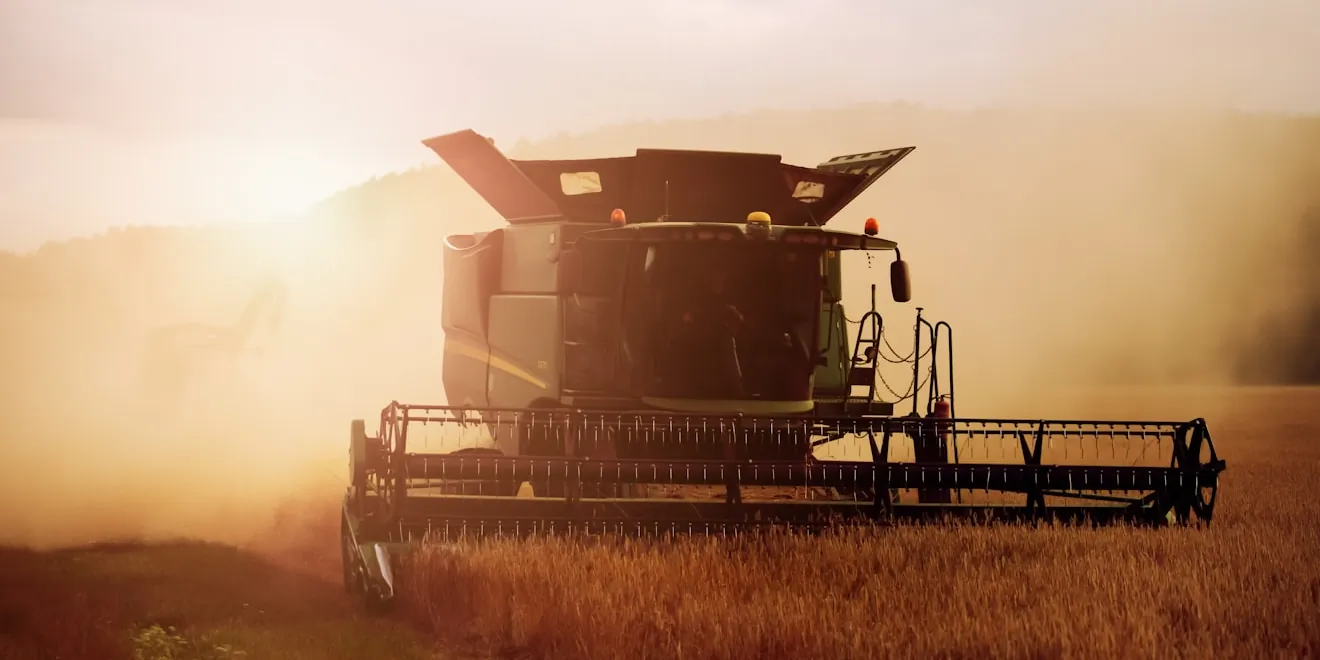
A combine breaks down mid-harvest. Nobody reaches for the policy first: the farmer rings the dealer's service department and looks for someone who can come and finish the last few hectares. Insurance comes up later, and that is when it may turn out that the policy pays for the repair but not the bill from the contractor whose combine did your harvesting for two weeks. In farm business insurance, details like this decide how much you get paid, so settle them with your insurer while the combine is still in the shed.
A family farm or a farming company with its own tractors, a grain dryer and a couple of sheds usually needs three or four types of cover rather than one: machinery, property, accident and liability, and sometimes one more for crops and livestock. Insurers often put several of these into a single contract, but each cover keeps its own terms and exclusions. The trouble starts at the boundaries between them: the shed is insured but the grain inside isn't, or the tractor is covered in the field and then overturns on the road.
Tractor and combine insurance: the repair is only part of the loss
In early September a combine picks up a stone in a wheat field and wrecks the threshing unit. If your machinery policy includes mechanical breakdown (sometimes called internal damage), sudden damage like this is normally covered. A policy that only covers fire, theft and collision won't pay for the repair. Machinery policies don't cover wear and tear either: a bearing or belt that should have been replaced last year is maintenance, and that comes out of your own pocket.
Downtime is trickier. While the combine stands idle for ten days, the grain sheds or sprouts in the ear, and you end up paying a neighbour or a contractor to come in with their own machine. When you arrange equipment insurance, ask whether it also pays for a hired combine or rented machinery while yours is in for repair.
Someone siphons the diesel out of a tractor left overnight at the edge of a field, and the GPS display and receiver disappear from the cab. Check the policy wording. Is theft from an unguarded site covered at all? Is removable GPS equipment insured along with the tractor, or does it have to be listed separately? And is fuel covered in the tractor's tank, in a storage tank, or not at all?
Farm machinery gets from field to field on public roads, often towing a trailer or a wide implement. A tractor used on the road needs OCTA, the compulsory motor liability insurance, but OCTA only pays for damage you cause to others. A tractor and trailer slide into a ditch on a wet road, and the only thing damaged is the tractor itself.
OCTA won't pay to repair it.
For that you need a machinery policy, and it's worth checking that its cover also applies on public roads.
When the grain dryer catches fire or a storm hits the shed
Dry dust builds up around the dryer's hot burner, and on the night shift there's often nobody watching. One spark is enough, and by morning all that's left is a metal frame and burnt grain.
After a fire like that, the insurer will first check whether you followed the safety rules set out in the policy, such as cleaning the dryer and supervising it at night. If you didn't, the payout can be reduced. After that, everything depends on the sums insured for the building and for the grain. There is far more grain in store in autumn than in spring, so if the stock sum was based on spring levels, it won't be enough in October. Seed, fertiliser and crop protection products work the other way round: stocks peak in spring. That's why we ask insurers whether the stock sum can be changed during the season or set at the year's peak from the start.
With sheds, the usual problem is the sum insured. A storm strips the roof sheeting off an old shed that is insured at a value which seemed about right ten years ago. If the sum insured is lower than what rebuilding would cost today, many policies cut the payout proportionally, even for minor damage such as a single section of roof torn off.
When you arrange business property insurance, list each building separately at its actual rebuilding cost rather than giving one total for the whole yard. Then there's no argument after a storm over which building the money was meant for.
Are your seasonal workers on the policy?
In autumn a farm also relies on people who are with you for just two or three months: drivers carting grain, helpers at the dryer, students at the intake point. One falls off a trailer. Another gets a glove dragged into a conveyor, fingers and all.
If the business already has accident insurance, look at how the policy lists the people it covers: by name, by job title or just as a headcount. If it's by name, seasonal workers won't appear on the list by themselves, so add them before their first shift. Also check whether the policy covers people working under a contract for services, or only those on an employment contract.
Farm liability: when a neighbour claims damages
You spray oilseed rape on a windy day, and it drifts onto a neighbour's organic field or over their beehives. Your cows break out of the paddock at night, wander onto the road and a car ploughs into them. Either way, the neighbour or the driver can claim damages from you.
A tractor repair has a ceiling: the price of a new tractor. There's no such ceiling on a neighbour's lost organic harvest or a driver's medical treatment. Your policy does have one, though: the liability limit per claim. Check whether it would be enough for a claim like this.
Cases like these are what general business liability insurance is for, but read its exclusions with particular care. In some policies, damage caused by crop protection products or pollution is excluded, or covered only under an additional clause. When we compare quotes, we point this exclusion out to the client separately, because once something has happened the policy can no longer be changed.
In the countryside people lend a neighbour a tractor without a second thought, especially when there's rain on the way. Before you lend yours, find out whether your policy covers machinery driven by someone who isn't your employee, and whether it applies on another farm's fields. Some policies allow only named drivers. If yours has that condition, agree in writing with your neighbour who pays for the repair if the tractor ends up in a ditch.
Crop and livestock insurance: getting LAD support
In July, hail flattens the barley. If hail is one of the risks listed in the policy, crop insurance can cover the loss. It won't pay out for a smaller harvest caused by late sowing. Only the risks named in the contract are covered, such as hail or winterkill, and each insurer has its own list.
Under the Common Agricultural Policy Strategic Plan 2023-2027, the Rural Support Service (LAD) partly reimburses the premium for insuring crops, plantations and farm animals. You apply through LAD's Electronic Application System (EPS) within the period LAD announces. The policy has to be paid in full, the insured land declared for the single area payment and the animals registered. Before you sign, ask the insurer whether the policy meets LAD's requirements: one that doesn't will not qualify for support.
What to ask your insurer before the season
These are the questions we ask when comparing quotes. If you're arranging cover without a broker, put them to the insurer yourself:
- Does the policy include machinery bought since the last renewal?
- Is the machinery covered if a neighbour's tractor driver is at the wheel?
- What is the excess on the combine and on the tractor, and is it different for theft?
- Which exclusions in the liability policy apply to crop protection products and animals?
How Agento reviews farm business insurance
You can fill in the request form, but to get started your current policies and a list of machinery are enough: make, year of manufacture, serial or registration number and approximate value. A list of buildings with their floor area and what's stored in each also helps, along with a rough headcount for the season.
From these we can see where cover overlaps and where there are gaps. As a broker, we then request quotes on the same terms from several insurers operating in Latvia, so that next to each price you can also see what each one covers and what it doesn't.
Photos make the machinery list useful after a loss as well: theft or damage is far easier to prove with a serial number and a picture than with someone's memory that the GPS was fitted.
Machinery and building policies are easiest to review straight after harvest or in winter, when the machines are standing idle. Winter crops are more urgent: if you want cover against winterkill, the policy usually has to be taken out in the autumn, so find out the deadline in good time.
Send us your policies and lists at least a month before they're due for renewal. That leaves time to read the exclusions and get quotes, rather than signing the first one that comes in.